
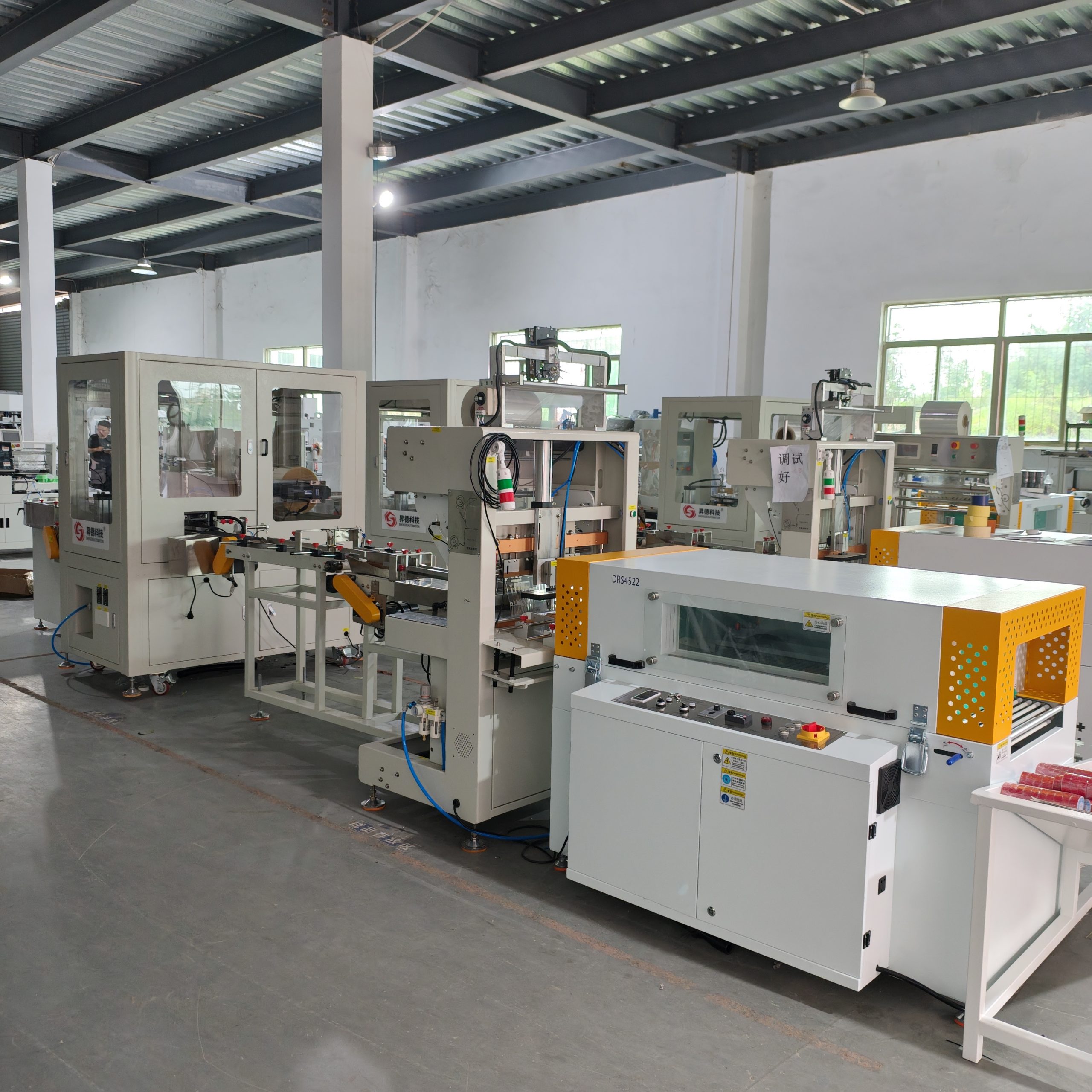

When a customer picks up a roll of tape from the shelf, they are not thinking about packaging machines. They are thinking about whether the wrap looks clean, whether the roll feels solid, and whether the brand looks like it is worth what they are paying.
That first impression is made by the film around the roll. Shrink packaging is not decoration. It keeps dust and moisture out, it stops the roll from telescoping in transit, and it is the first thing a distributor sees when the carton opens. A loose or torn wrap turns into returns, rejected lots, and a brand that looks cheap on the shelf.
What the Buyer Actually Feels
A buyer at the shelf does not read a spec sheet. They feel three things:
- Whether the seal holds
- Whether the wrap is tight and clean
- Whether the pack looks like it was made with care
On your side, those three things come down to seal strength, film consumption, and how many rolls you get per minute. A weak seal or a slack wrap is a rejection waiting at the other end of the shipping container. Speed means nothing if the seam opens in transit.
For a deeper comparison of packaging formats, see our guide on how to choose the right tape packaging machine.
The Models, and What Each One Is For
The machines below are the common choices for tape factories, each corresponding to a different packaging format. The difference is not just roll format and output, it is which packaging format your market actually prefers.
For each machine, pay attention to four things: output, operating complexity, consumable cost, and how much operator attention it needs.
SD-60SS Single Electrical Tape Automatic Packaging Machine
Built for PVC electrical tape: the roll is small, light, and ships in volume, which is exactly where manual wrapping is slow and inconsistent.
- Man-machine interface runs on a programmable micro-computer control with automatic fault alarm and one-key intelligent operation
- High-precision mechanical hand handles paper-card suction
- Constant-temperature control system is adjustable, so the seal stays consistent across a long shift
- Turntable structure keeps it compact
- Servo motor drive keeps the motion repeatable
Best for: standard electrical tape volume, single-roll retail packs. Full specifications are on the SD-60SS single electrical tape automatic packaging machine page.
SD-77HM High Speed Automatic Sleeve Label Shrink Packaging Machine
Same process, built for larger rolls, typically 3 inch (76 mm) inner core tapes including BOPP tape, masking tape, duct tape, and double-sided tape. One machine, multiple tape types.
This is the answer to the instability and low yield of traditional manual packing. If your wrapper is the station that sets your line rate, this is the one that stops being the bottleneck. It handles all kinds of tape shrink film plus paper card packaging.
Best for: high-volume BOPP, masking, duct, and double-sided tape lines. See the SD-77 tape heat shrink film packing machine.
SD-920HM Semi-Automatic Multi-Roll Sleeve Film Heat Shrink Packaging Machine
This one answers a different question: are you shipping single rolls or multipacks?
It is the version of the multi-roll wrapper that runs semi-automatically. The operator loads the rolls by hand and the machine takes over from there, which suits a plant that changes formats often and would rather keep the machine simple than chase the last few packs per minute. It is sized around 76 mm (3 inch) inner core tape, and the pack quality on a semi-auto machine is better than on its fully automatic equivalent, because the roll is placed squarely in the mold instead of being pushed in.
- Supports single-roll or multi-roll packaging
- Different diameter specifications handled by swapping the corresponding mold, a modular design rather than a rebuild
- Height specifications customised to what you actually run
- Colour film and transparent film can be opened independently
- Paper cards are sucked and released automatically
- Manipulator handles discharge
- Wireless remote APP monitoring and system upgrade
- Stops automatically on fault alarm
- Simple operation and easy maintenance
Best for: mixed diameters, single-roll and multi-roll production on one line, where format flexibility and pack quality matter more than running the wrapper unattended. The SD-920HM multi-roll film heat shrink packaging machine covers both formats.
SD-65MB + SD-1060 + SD-4522 Automatic Multifunction Folding Electrical Tape Packing Machine
For folded-corner shrink packaging, the format most PVC electrical insulating tapes use when the pack needs square, tidy corners.
- Microcomputer programmable control with automatic paper-card release
- Switches between printed film and label paper-card with one click
- Different products need a mold change, and the adjustment is straightforward
Best for: PVC electrical insulating tape with folded-corner retail packs. See the SD-65MB folding electrical tape packing machine.
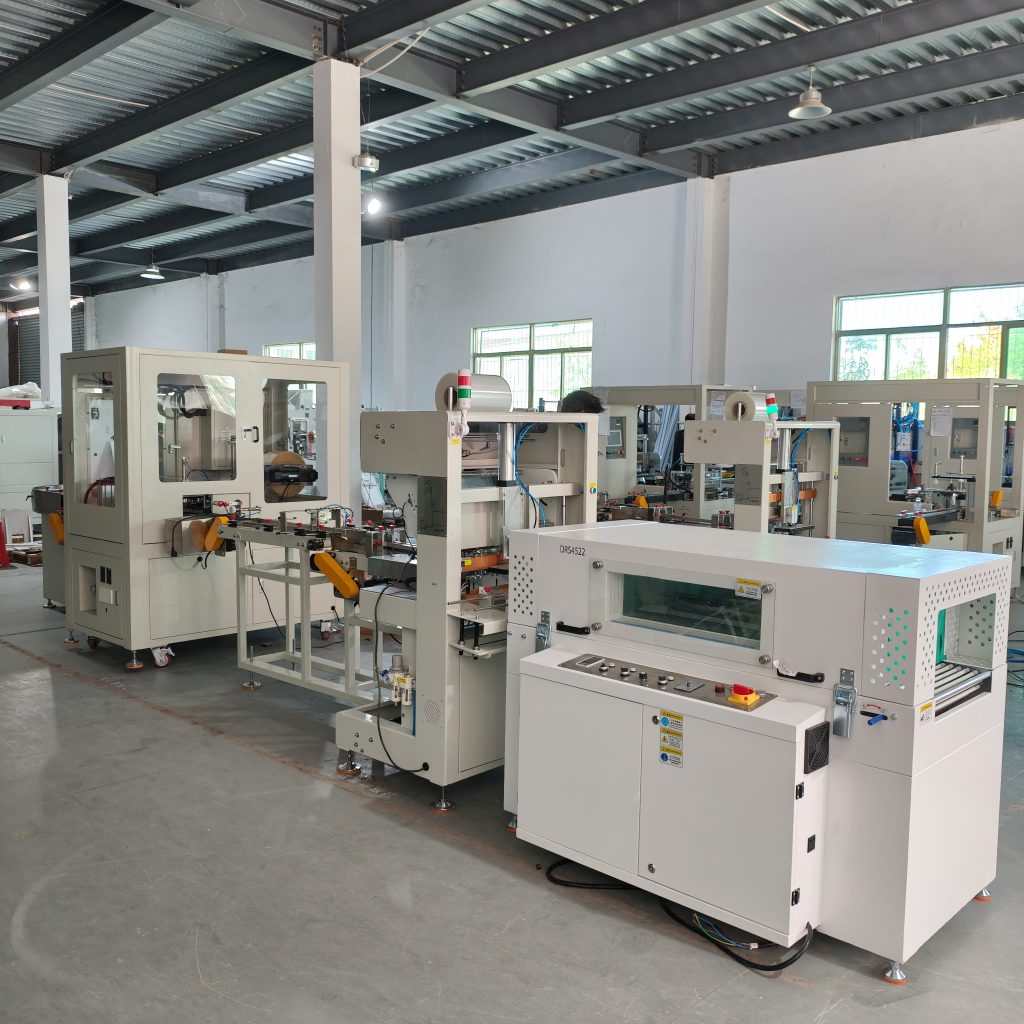
SD-350 Horizontal Automatic Flow Pouch Packing Machine
Not a shrink machine, but it often gets quoted against one. It makes pillow bags instead of shrink packs, for irregular articles and solid objects.
- Three servos with a touch screen
- Product parameter recipes stored and reusable
- Automatic bag-length adjustment with no manual setting
If your product is a multipack that does not need a skin-tight wrap, a flow pack uses less energy than a tunnel, because there is no tunnel to heat.
Best for: multipacks and irregular products that do not need a skin-tight finish. The SD-350 horizontal flow pouch packing machine runs these.
SD-BL450 + SD-4522 L Type Bar Sealer with Heat Shrink Tunnel
The general-purpose option, used for tapes as well as stationery, hardware, cosmetics and food.
- Firm sealing
- High-temperature resistant without mucous membrane
- Photoelectric auto-induction
- Automatic winding of film waste
- Organic glass shield with an automatic-opening alarm
Best for: general-purpose shrink wrapping across multiple product categories. See the SD-BL450 L type bar sealer with shrink tunnel.
SD-1060 + SD-4522 Sleeve Film Heat Shrink Packing Machine
PVC column packaging: a whole column of tape sleeved and shrunk as one unit, settable to 6, 8, or 10 rolls, rather than roll by roll.
- Automatic defective-product filtering built in
- Different specifications run without changing the film
If your customers buy tape in columns, this is the format they expect.
Best for: industrial column orders, PVC tape.
Model Comparison at a Glance
| Model | Tape Type | Roll Format | Output | Operator Attention | Film Type |
|---|---|---|---|---|---|
| SD-60SS | PVC electrical | Single roll | Medium | Low | POF / PVC |
| SD-77HM | BOPP, masking, duct, double-sided | 3 inch core | High | Low | POF / PVC / PE |
| SD-920HM | Multiple types | Single or multi-roll | Medium (semi-auto, manual loading) | Medium | POF / PVC |
| SD-65MB | PVC electrical | Folded corner | Medium | Medium | Printed / label |
| SD-350 | Multipack | Pillow bag | High | Low | PE |
| SD-BL450 | General | L-seal | Medium | Medium | POF / PVC / PE |
| SD-1060 | PVC | Column | Medium | Low | PVC |
Where Shrink Packaging Fits on a Tape Line
Shrink packaging is not a standalone station. It is one link in a chain, and it inherits every problem created upstream.
The flow on a tape plant runs like this:
Paper core preparation on an SD-F001 automatic paper core cutting machine → slitting and rewinding → single-roll or multi-roll shrink packaging on the SD-60SS, SD-77HM, SD-920HM, SD-65MB, SD-BL450, or SD-350, depending on tape type and market demand → case opening → case packing → case sealing → palletizing.
The rewinder sets the roll’s diameter and quality. The wrapper then has to protect that roll without contaminating it, and the tunnel has to shrink the film without cooking it.
Size the wrapper to the rewinder’s peak, not its average. Under-size it and you have built a bottleneck that stalls the line every time the rewinder runs at capacity.
.mp4_20260113_152844.106.jpg)
Shrink Tunnel Temperature Zones: Where Wrinkles Come From
Most complaints about a shrink wrapper are actually complaints about the tunnel, and the tunnel is almost always a settings problem rather than a hardware problem.
The SD-4522 jet internal circulation shrink machine is a heat shrink packing machine built around an internal circulation hot-air tunnel, not a steam tunnel, and it runs POF, PVC, and PE film. Those three films do not behave the same way.
A tunnel does its work in three zones:
- First zone brings the film up toward its shrink point
- Middle zone is where the film actually contracts onto the roll
- Last zone sets the film so it does not relax and go slack after it leaves the heat
What goes wrong, in the order we see it:
- Fish-eyes and unshrunk patches mean the film never reached its shrink point, usually because the line is running faster than the tunnel can heat. Slow the conveyor before you raise the temperature.
- Wrinkles and dog-ears mean the film shrank unevenly. Check the airflow first, then the film tension, and only then the temperature.
- Burnt or hazy film means too much heat or too long in the zone. PE runs hotter than POF, POF shrinks at a lower temperature than PVC, so a setting copied from one film to another will fail.
- Slack packs that tighten up on the shelf mean the setting zone is too short. The film shrank, then relaxed.
Two rules that save the most time:
- Treat roll diameter as a variable: a larger diameter roll needs more dwell time at the same temperature, and a multi-roll pack behaves differently from a single roll even at the same total width.
- Confirm the numbers against your film supplier’s datasheet rather than against a previous job. Film changes more often than machine settings do, and most calls about a broken machine turn out to be a new film on old settings.
Shrink Wrap, Flow Pack, or Column Sleeve
These get quoted against each other, and they are not interchangeable.
Shrink wrap protects the finished roll. Heat tightens the film into a sealed package that keeps dust and moisture out, and it is the default for individual tape rolls headed to a retail shelf.
Flow pack makes a pillow bag instead, which uses no tunnel and suits multipacks and irregular shapes.
Column sleeve wraps a whole column of tape as one unit and is what many industrial buyers expect.
Then there are two things that get confused with shrink wrap but are different jobs:
Stretch wrap binds a load, usually a pallet of finished cartons, using the film’s own tension and no heat at all.
Sleeve labeling applies brand and tamper evidence with a shrinkable label sleeve, which is identification rather than protection.
The decision is not which film. It is what the film has to do on your line.
- Individual roll protection, shrink wrap
- Multipacks that do not need a skin-tight finish, flow pack
- Industrial column orders, sleeve
- Pallet loads, stretch wrap
How to Choose
- Match the machine to your roll count, not to your ambition. Count rolls per shift, then rate the line at roughly 60% of peak demand. The SD-60SS suits standard electrical tape volume, the SD-920HM covers multi-roll and mixed diameters, and the SD-77HM suits standard 3 inch inner core tape.
- Decide the pack format before you look at machines. Single roll, multipack, folded corner, or column. That choice eliminates half the options immediately, and it is driven by your customers, not by the equipment.
- Confirm film compatibility first. Check that the machine runs the film you can actually buy locally, and whether the tunnel handles POF, PVC, and PE. A machine that only runs a proprietary film locks you into one supplier.
- Check seal strength, not just speed. A fast wrapper with a weak seal sends loose rolls to your customer. Watch a sample wrap, then stack it and drop it once before you commit.
- Look at changeover time between roll sizes. If you run several widths or diameters, the machine has to switch fast. On the SD-920HM that is a mold change, on the SD-F001 it is a parameter entry on the touchscreen. Minutes of changeover multiply across a shift into real lost output. On a semi-automatic machine the changeover is also where the operator’s time goes, so count the mold swaps per shift before you count the pack rate.
- Confirm CE and guarding before you quote freight. CE certification and light-curtain guarding are not optional on an export line. Confirm them up front, or your operators and your customs paperwork both take the hit.
If you want the wider comparison, including the cases where a shrink wrapper is the wrong answer, see our guide on comparing tape packing machines.
Why Shengde
We build shrink packaging lines that keep running. Our equipment is proven under two-shift production for seven years without a rebuild.
Installation is video-guided and remote: the machine is standing the same day it arrives, then one to three days of commissioning and you are wrapping sellable rolls. No expensive field trip, and no waiting on a technician’s passport.
Every machine we ship for export carries CE certification and light-curtain guarding as standard, not as an upgrade line on the quote.
FAQ
Can one machine run both single rolls and multipacks?
Sometimes. The SD-920HM supports both, but it does it with a mold change for different diameters, so the question is how often you switch. If you change format several times a shift, a dedicated machine per format usually produces more than one flexible machine.
Do I need a tunnel if I use a flow pack machine?
No. The SD-350 seals and cuts a pillow bag without heat shrinking, which removes the tunnel and its energy cost. You lose the skin-tight finish, so it suits multipacks and irregular products rather than single retail rolls.
What causes slack wraps a week after packing?
Almost always a setting zone that was too short, or dwell time that was too low for the roll diameter. The film shrank, then relaxed. Fix it by extending the set zone or slowing the conveyor, not by raising the temperature.
What film types can a tape shrink packaging machine run?
Most tape shrink packaging machines run POF, PVC, and PE film. PE runs hotter than POF, and POF shrinks at a lower temperature than PVC. Always confirm film compatibility with the machine supplier and against the film supplier’s datasheet before production.
How many rolls per minute can a tape shrink packaging machine produce?
Output depends on roll size, pack format, and film type. The SD-77HM is the high-speed option when the wrapper is the bottleneck, and the SD-60SS suits standard electrical tape volume. As a rule, rate the line at roughly 60% of peak demand to avoid building a bottleneck.
Next Step
Send us your roll diameters, your pack format, and your target rolls per shift. We will size the machine model to those three numbers and tell you honestly if a shrink line is the wrong answer for your mix. That is the conversation worth having before you look at a quote.
For running costs after the machine lands, see how to save money on tape packing machine maintenance.
