
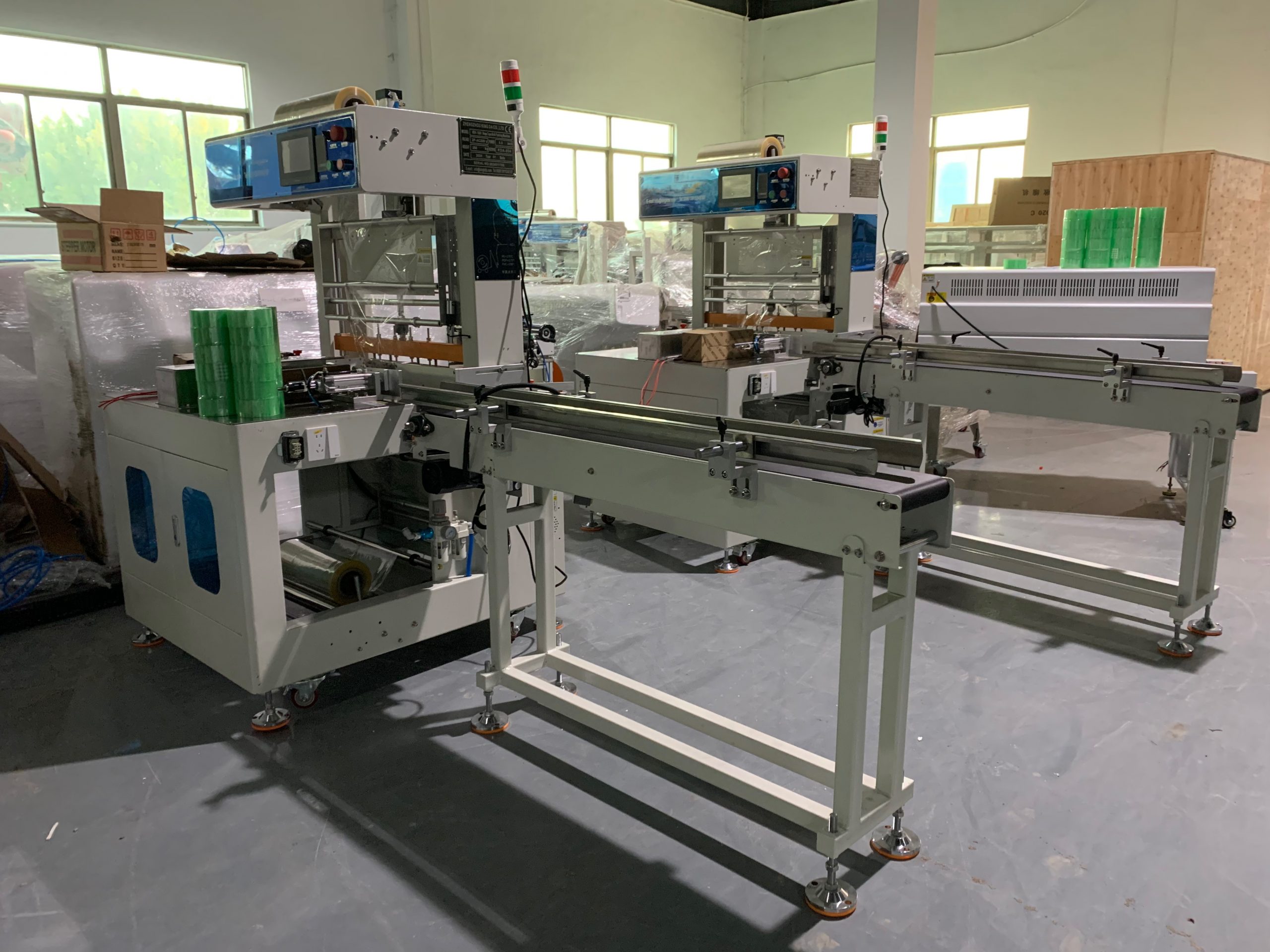

The maintenance line on your budget is not the cost of spare parts. It is the cost of the line standing still. A blade costs very little; an hour of a stopped wrapper means slit rolls piling up behind it and a packing crew standing around in front of it. Most of the money plants lose to maintenance is lost in that hour, not in the purchase order.
That changes what “saving money on maintenance” means. It is not about buying cheaper parts or stretching service intervals. It is about making failures predictable, keeping the parts that fail on site, and knowing which problems you can solve over a video call before anyone books a flight. This is how that works on a tape packing line, and what to ask for before you buy the machine.
Where the money actually goes
Three things drive the cost, and only one of them looks like maintenance on a spreadsheet.
Unplanned downtime. A wrapper stops in the middle of a shift, the tunnel keeps heating, and everything upstream backs up. The lost output is usually two orders of magnitude larger than the failed part.
Waste while running badly. A dull sealing blade does not stop the machine; it produces packs with weak seals and film tails that get reworked or scrapped at the end of the shift. Same for a tunnel that has drifted out of temperature: the film either does not tighten or overheats the tape. The machine reports “running”, and the loss shows up in the reject bin.
Waiting. Waiting for a diagnosis, waiting for a part, waiting for an engineer who has to fly. On export lines this is the biggest of the three, and it is the one you can negotiate before you buy rather than after.
Everything below is aimed at moving failures out of the first category and into the schedule.
The service schedule that prevents most stoppages
This is the routine we recommend for a single-roll shrink wrapper and its tunnel. It assumes two-shift running; a one-shift plant can stretch the weekly items.
| Frequency | What to do | What happens if you skip it |
|---|---|---|
| Every shift | Clear film residue off the sealing blade with a brass or wooden scraper, never a steel blade | Seals come out weak or ragged; film builds up until the knife jams |
| Every shift | Drain the air filter bowl; confirm supply pressure holds at 0.5 MPa | Water in the air line reaches the cylinders; seals get slow and inconsistent |
| Every shift | Wipe the photo-eye and light-curtain faces; brush film dust out of the tunnel entry and exit | Mis-feeds and phantom stops; film dust burns on the tunnel mouth |
| Weekly | Check conveyor chain or mesh belt tension; lubricate per the machine manual | Belt tracks off, packs skew, seals land off-center |
| Weekly | Look over the heating elements and their terminals for discoloration | One element fails mid-shift and the tunnel loses half its heat |
| Weekly | Inspect the blade edge; turn or replace at the first sign of a rounded edge | Heat has to work harder to seal, and the seal quality slides slowly |
| Monthly | Check tunnel temperature against a separate probe, not just the panel reading | The panel says 180°C and the chamber is running 30°C off; film behaviour changes and nobody knows why |
| Monthly | Re-torque electrical terminals in the cabinet; confirm the light curtain stops the machine when interrupted | Loose terminals under load are how heating circuits fail; an untested curtain is an unproven safety system |
| Quarterly | Lubricate bearings and the drive; inspect belts and couplings for wear | Drive failures are the ones that take days, not hours |
None of this needs a specialist. It needs an assigned person and a checklist on the wall, which is the part most plants skip.
The wear parts that actually fail
Every machine has a short list of parts that account for most service calls. Know these, stock these, and you have removed the waiting cost from most failures.
| Part | Tells you it is going | If you run it to failure | What to do |
|---|---|---|---|
| Sealing blade | Seals look hairy or stringy; film pulls instead of cutting | Knife jams, cycle stops, possible damage to the anvil | Replace; it is a consumable, not a repair |
| Heating element | One side of the pack shrinks and the other does not; temperature climbs slower than usual | Tunnel cannot hold setpoint; output drops | Replace the failed element; check the terminals at the same time |
| Conveyor belt / chain | Packs drift out of alignment; belt slips under load | Packs jam in the tunnel and burn | Re-tension first, replace when stretched past adjustment |
| Heat-resistant cloth / silicone on the seal bar | Film sticks to the bar; seals tear on opening | Film buildup, smoke, burned packs | Replace the cloth; it is cheap and it protects the blade |
| Cylinder seals | Motion gets sluggish; cycle time creeps up | Cylinder stalls mid-cycle | Rebuild kit, done on a scheduled stop |
| Photo-eye / proximity switch | Intermittent mis-feeds that move around the machine | Hard to diagnose stoppages that look electrical | Clean first, replace if the lens is pitted |
| SSR and temperature controller | Temperature swings widely around setpoint | Element burns out, or product overheats | Replace the controller; keep one on the shelf |
Notice how many of these announce themselves days in advance. The schedule exists to catch the announcement.
The tunnel is where the power goes
On a shrink line the tunnel is the largest electrical load, and it is where settings quietly cost money. Two of our tunnels show the trade-off clearly: the SD-4020 is the economical unit at about 9 kW, single-frequency drive, no insulation blanket, and the area around it runs warm. The SD-4522 runs about 6 kW with a dual-frequency drive and insulated walls, so it draws less power and keeps the shop floor cooler. Same job, different running cost. If your line runs two shifts, the difference shows up in the power bill and in the cooling load on the room, and it is worth doing that arithmetic before choosing.
The other tunnel cost is film. Match film thickness to the machine’s rated range — 0.035–0.04 mm on the SD-60SS, 0.04–0.045 mm on the SD-77HM, both around 50% shrink. Running film outside that range is the most common cause of “the tunnel is not working” complaints that turn out to be a film specification problem. If packs come out loose, the fix is usually a step slower on the conveyor or 10–15°C more heat, not a new heater.
What to keep on the shelf
A spare parts kit should be sized to your machine, not bought generically, because the blade and seal bar dimensions differ by model. For a single-roll wrapper such as the SD-60SS or the SD-77HM, the first-year kit is short:
- one spare sealing blade, and one spare heat-resistant cloth set
- one spare heating element for the tunnel you actually run
- a cylinder seal kit
- one photo-eye of the type fitted
- one temperature controller
After the first year you will know your own failure pattern, and the kit should follow it. A plant running two shifts with heavy film dust will go through blades and photo-eyes faster; a plant running one shift on clean film will not. Order the second-year kit from your own records, not from a generic list.
What can be fixed without a visit
Most stoppages on these machines are settings, sensors, or consumables, and all three can be diagnosed from a phone video. Send a clip of the cycle, a photo of the fault on the panel, and the film specification you are running, and in most cases you get an answer the same day: which part to swap, or which setting to change. Installation and commissioning are handled the same way — machine set up the same day over a video call, 1–3 days of commissioning, no fly-out.
What cannot be fixed remotely is a mechanical failure inside a gearbox or a bent shaft, and no supplier should pretend otherwise. The honest test is whether they tell you that quickly, so you can decide whether to stop the line now or finish the shift.
We have machines from a 2019 batch still running two shifts seven years later without a major rebuild. That is not a promise about your machine; it is what scheduled maintenance plus remote support has produced on lines that actually do the schedule.
Four things to settle before you buy
These belong in the purchase conversation, because they are expensive to negotiate after the machine is on the floor.
- Is remote diagnosis included, and in what response time? “We can help” is not a commitment. Ask what they need from you and how fast they answer.
- Do you get a spare parts list with prices at delivery? A machine without a priced parts list turns every future purchase into a negotiation.
- Are the consumables standard sizes? If the blade is a custom grind available from one source, you have accepted a single-supplier dependency for as long as you run the machine.
- Is CE marking and light-curtain guarding standard or optional? For an export line it is not optional, and it is also the cheapest insurance you will ever buy on the maintenance side of the budget.
FAQ
How often does a tape packing machine need service?
The routine items are per shift and weekly; the instrument checks are monthly. The intervals are short because the parts that cause stoppages are consumables, not precision components. A plant that does the shift-level items rarely needs a call-out.
How long does a sealing blade last?
It depends on film, shift count, and how clean the seal bar is kept, so a number quoted without those is marketing. Watch the seal quality instead of the calendar: when the edge starts leaving hairs or pulling film, turn or replace it.
Can our own technicians replace parts without voiding the warranty?
On our machines, yes, for consumables and standard wear parts, and we send the procedure. What we ask is that you call before replacing anything that involves the control system, so a misdiagnosed sensor does not turn into a week of parts swapping.
What is the fastest way to recover from a stoppage?
Video the cycle and photograph the panel, then send the film specification alongside. Those three things identify most faults the same day. Ordering a part first and diagnosing second is the slow path.
Bottom line
Maintenance saving on a tape packing line comes from three habits: run the short checklist, keep the small parts that actually fail on the shelf, and use remote diagnosis before you use a plane. The parts are cheap. The hour is not.
Send us your machine model, the symptom, and a short clip of the cycle at contact us, and we will tell you whether it is a part, a setting, or a film specification problem.
