
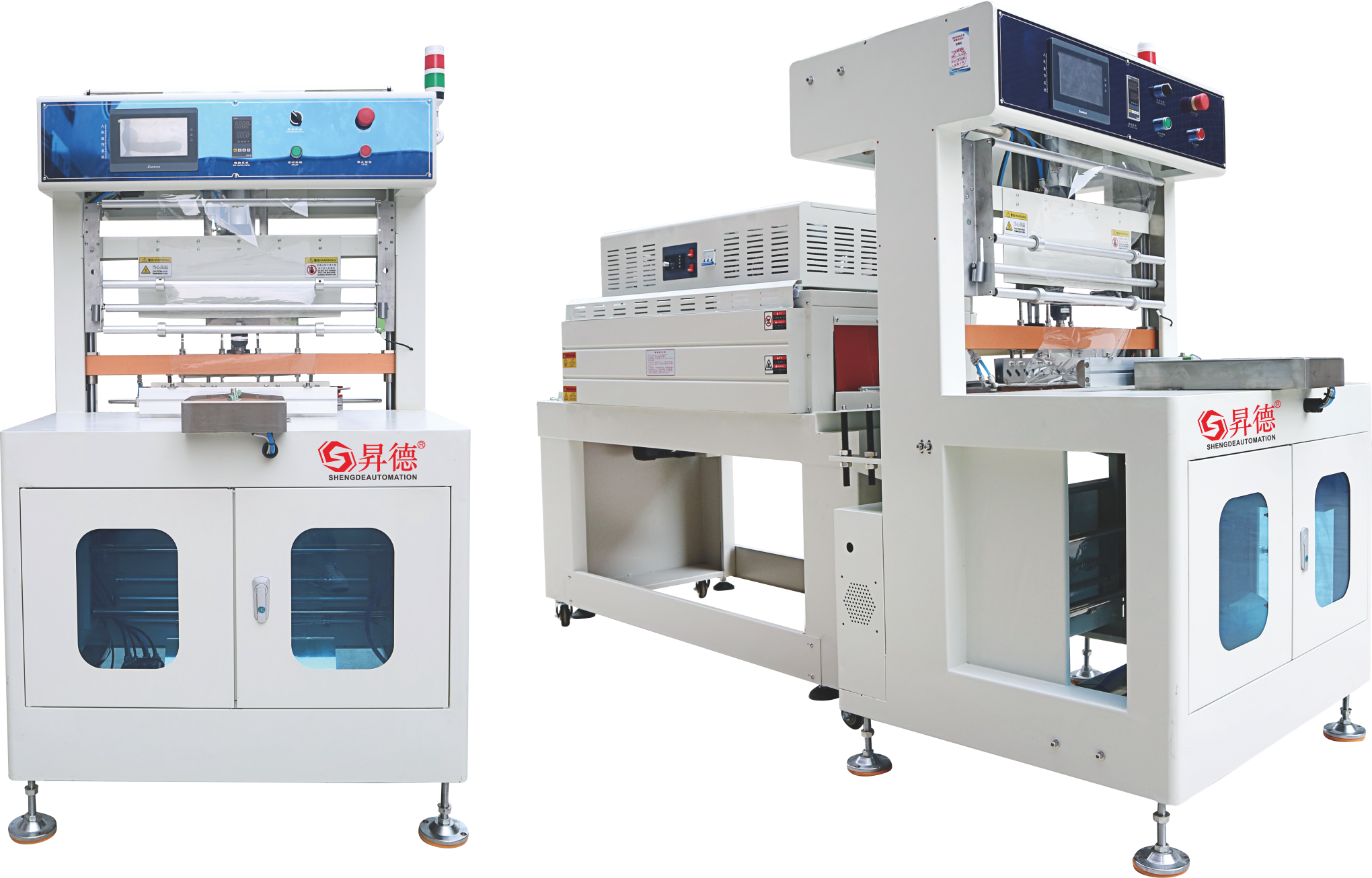

Most tape plants do not lose money on the packaging machine they bought. They lose money on the one they should have bought. The wrapper that cannot take the multi-roll packs the market started asking for last season. The tunnel that runs one film well and everything else badly. The machine sized to last year’s peak.
This guide is about getting that decision right the first time. It covers what a tape packaging machine actually is in this industry, the three questions that settle most of the choice, which machine answers which combination, and the commercial questions worth asking before you sign.
What a Tape Packaging Machine Means Here
Start with a confusion that costs people real time.
In a warehouse or a fulfilment centre, “tape packaging machine” usually means a carton sealer: a machine that applies packing tape to a box. That is a different industry, and it is not what this guide covers.
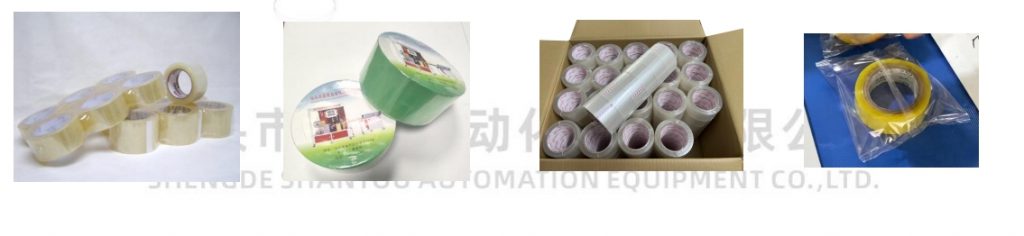
In a tape factory, a tape packaging machine wraps the tape roll itself. It takes finished rolls off the rewinder and turns them into a sellable pack: a shrink-wrapped single roll for a retail shelf, a folded-corner electrical tape pack, a column of rolls sleeved and shrunk as one unit. This is the station that decides what your customer sees when the carton opens, and it is the station we build.
If you came here looking for a carton sealing machine, this is the wrong page. Everything below is about rolls.
The Three Questions That Settle Most of the Choice
Three questions decide the machine for the large majority of tape plants. Everything after that is confirmation.
1. What core diameter are your rolls on?
This is the first filter, and it eliminates more options than any other.
Electrical tape usually runs on 38-42 mm cores. BOPP, masking, duct and double-sided tape usually run on 76 mm (3 inch) cores. A machine built for one core range does not run the other, so the answer to this question points you at a family of machines before you have looked at a single price.
If your catalogue mixes both, you are either buying two single-roll machines or one that covers a mixed range at a semi-automatic level. There is no fully automatic machine that does both well, and a supplier who says otherwise is quoting you a commissioning problem.
2. What pack format does your market actually buy?
Single roll, multipack, folded corner, or column. This is set by your customers, not by your equipment budget.
A market that sells single rolls to retail wants a skin-tight wrap with a paper card behind it. An industrial market that buys tape by the column wants six, eight or ten rolls sleeved together as one unit. A market buying tools, hardware or household goods in mixed cartons often does not want a skin-tight wrap at all and is better served by a pillow bag.
Decide this before you compare machines. Half the options disappear the moment you commit to a format.
3. How many rolls per shift, on how many shifts?
Count rolls, not cartons, and count them across every shift the line runs. Then rate the machine against roughly 60 percent of your peak demand rather than the average, because the packaging station inherits whatever the rewinder produces.
A single-roll line that runs two shifts and sits behind a high-output rewinder is a different sizing problem from a one-shift plant packing a few hundred rolls a day. Same machine family, different configuration.
The Machines, Matched to Those Questions
SD-60SS: Single Roll on 38-42 mm Cores
This is the machine for small-core electrical tape in single-roll packs, where hand wrapping is slow and inconsistent. It runs a programmable micro-computer control with fault alarm and one-key operation, a mechanical hand for paper-card suction, and a constant-temperature seal that holds across a long shift. Rated 0-65 rolls/min.
Choose it when your cores are 38-42 mm and your output is standard electrical tape in single rolls. Details are on the SD-60SS single electrical tape automatic packaging machine page.
SD-77HM: Single Roll on 76 mm Cores
Same single-roll job, built around the larger core. 76 mm is a hard limit here, so 38 mm and 56 mm cores will not run on it. It handles the full range of tape shrink films plus paper card packaging. Rated 0-55 rolls/min.
Choose it when the wrapper is the station that sets your line rate and your product runs on 3-inch cores. See the SD-77 tape heat shrink film packing machine.
SD-920HM: Single Roll and Multipacks on One Machine
The semi-automatic option, and the one to look at when your catalogue refuses to sit still. The operator loads the roll by hand, which is also where the pack quality comes from: the roll is placed squarely in the mold rather than pushed into it.
It covers single-roll and multi-roll packs, 76 mm as the main core size with 56 mm and 38 mm as secondary ones, and swaps molds for a diameter change instead of needing a rebuild. Colour film and transparent film open independently, paper cards are sucked and released automatically, and the machine stops on a fault alarm. Rated 0-50 packs/min, and a pack can hold more than one roll, so packs/min is not rolls/min.
Choose it when you would rather run a simple machine than chase the last few packs per minute. The SD-920HM multi-roll film heat shrink packaging machine covers both formats.
When the Format Is Not a Shrink Wrap
Three other formats come up often enough to name. Folded-corner packs for PVC electrical tape run on the SD-65MB folding electrical tape packing machine line. Pillow bags, for multipacks and irregular shapes that need no skin-tight finish, run on the SD-350 horizontal flow pouch packing machine, which uses no tunnel and therefore no tunnel energy. Whole columns are sleeved and shrunk on the SD-1060 and SD-4522 sleeve film line. And where the job is general-purpose shrink wrapping across tapes, stationery and hardware at once, the SD-BL450 bar sealer with heat shrink tunnel does it.
If your format is a shrink-wrapped roll in any configuration, our heat shrink packaging machine buyer’s guide goes deeper on the tunnel side.
Where Packaging Fits on a Tape Line
The packaging station is never the first problem on a tape line, and it is never solved in isolation.
Paper core preparation on a paper core cutting machine → rewinding and slitting → packaging (single roll, multi-roll, folded corner, pillow bag, or column) → labeling → case erecting and sealing → palletizing.
Two things follow from that flow. First, the rewinder sets the roll diameter and the roll quality, and the wrapper can only protect what it is handed. Second, size the wrapper to the rewinder’s peak, not its average, or you have built a bottleneck that stalls the line every time the rewinder runs at capacity.
This is also why we ask for the rolls-per-shift figure rather than the machine’s rated speed. A nameplate number tells you what the machine can do in a good hour. The line tells you what it has to do every hour.
What Changes the Answer Later
Machines are usually bought for today’s order book and blamed for next year’s. Three things move the answer after the fact, and it is worth knowing which of them apply to you before you sign.
A new pack format. Moving from single rolls to multipacks, or adding a folded-corner line for a retail customer, means a different machine or a mold change. Ask now what a format change costs on the model you are considering, because on some machines it is a parameter entry and on others it is a rebuild.
A new core size. If a customer asks for 76 mm cores while you run 38 mm, the single-roll machines cannot follow. This is the one change that most often forces a semi-automatic machine into a plant that did not want one.
Volume growth. Below roughly 500 rolls a day per packing station, hand packing with cheap labour can still be the cheaper line on the P&L. Above 800, the labour cost of manual packing usually passes the machine’s amortised cost inside the first year, before you count rejects. Most plants that buy a wrapper are somewhere in that band and growing.
For a direct comparison of the formats themselves, including the cases where a shrink wrapper is the wrong answer, see our guide on comparing tape packing machines.
Questions to Ask Before You Sign
The technical fit is settled by now. These questions settle whether the supplier is worth signing with, and they are the ones buyers remember too late.
Who installs it, and who pays for the trip?
Ask whether a commissioning visit sits inside the price or on a separate line. On our machines, setup is video-guided: the line is standing the day it arrives, followed by one to three days of commissioning before you are wrapping sellable rolls. No visa paperwork, no flights and hotels added to the machine price.
Is CE certification and light-curtain guarding included?
On an export line these are not optional, and they should not appear as a surprise on the final invoice. Confirm both in writing in the quote.
How does the machine behave after seven years of two-shift work?
Ask for reference plants running the same model on the same duty cycle. A machine that needs a rebuild after three years costs more than the price gap between two quotes.
How are diameter and height changes handled?
Mold swap, parameter entry, or rebuild. If the answer is a rebuild, the machine only fits the products you have today.
Can faults be resolved remotely?
Ask what happens when the alarm goes off. On our machines the alarm stops the machine, the fault is reported, and the fix is usually a parameter or a sensor adjustment handled on a call.
These are the standards we build to at Shengde.
FAQ
How much does a tape packaging machine cost?
It depends on the pack format, the core range, the automation level and the film the tunnel has to run, so there is no honest single number. Send your core diameter, pack format and rolls per shift, and we will come back with a machine sized to those three numbers. A sized quote takes one working day.
Can one machine pack both single rolls and multipacks?
Yes, at a semi-automatic level. The SD-920HM runs single-roll and multi-roll packs on one frame, with a mold change for different diameters. The question is how often you switch. If you change format several times a shift, a dedicated machine per format usually produces more than one flexible machine.
Do I need a shrink tunnel, or can I use a pillow bag?
Only if you need a skin-tight wrap. A flow pouch machine seals and cuts a bag without any heat shrinking, which removes the tunnel and its running cost. You lose the tight, carded retail look, so pillow bags suit multipacks, hardware and irregular products rather than single retail rolls.
What is the difference between rolls per minute and packs per minute?
A pack can hold more than one roll. Single-roll machines are rated in rolls/min and multi-roll machines in packs/min, so a 0-50 packs/min figure is not 50 rolls. Put both quotes on a rolls-per-shift basis before you compare them.
What film can a tape packaging machine run?
Most tape packaging lines run POF, PVC and PE film, but not every machine runs all three, and PE runs hotter than POF while POF shrinks at a lower temperature than PVC. Confirm compatibility against your film supplier’s datasheet before production rather than against a previous job.
Next Step
Send us three numbers: your core diameter, your pack format, and your target rolls per shift. We will reply with one page sizing those to a machine, with no prices and no obligation. If a packaging machine is genuinely the wrong answer for your mix, we will tell you that instead.
If you already know your specification and want to move, request a quote from Shantou Shengde sized to your plant.
For running costs after the machine lands, see how to save money on tape packing machine maintenance.
