
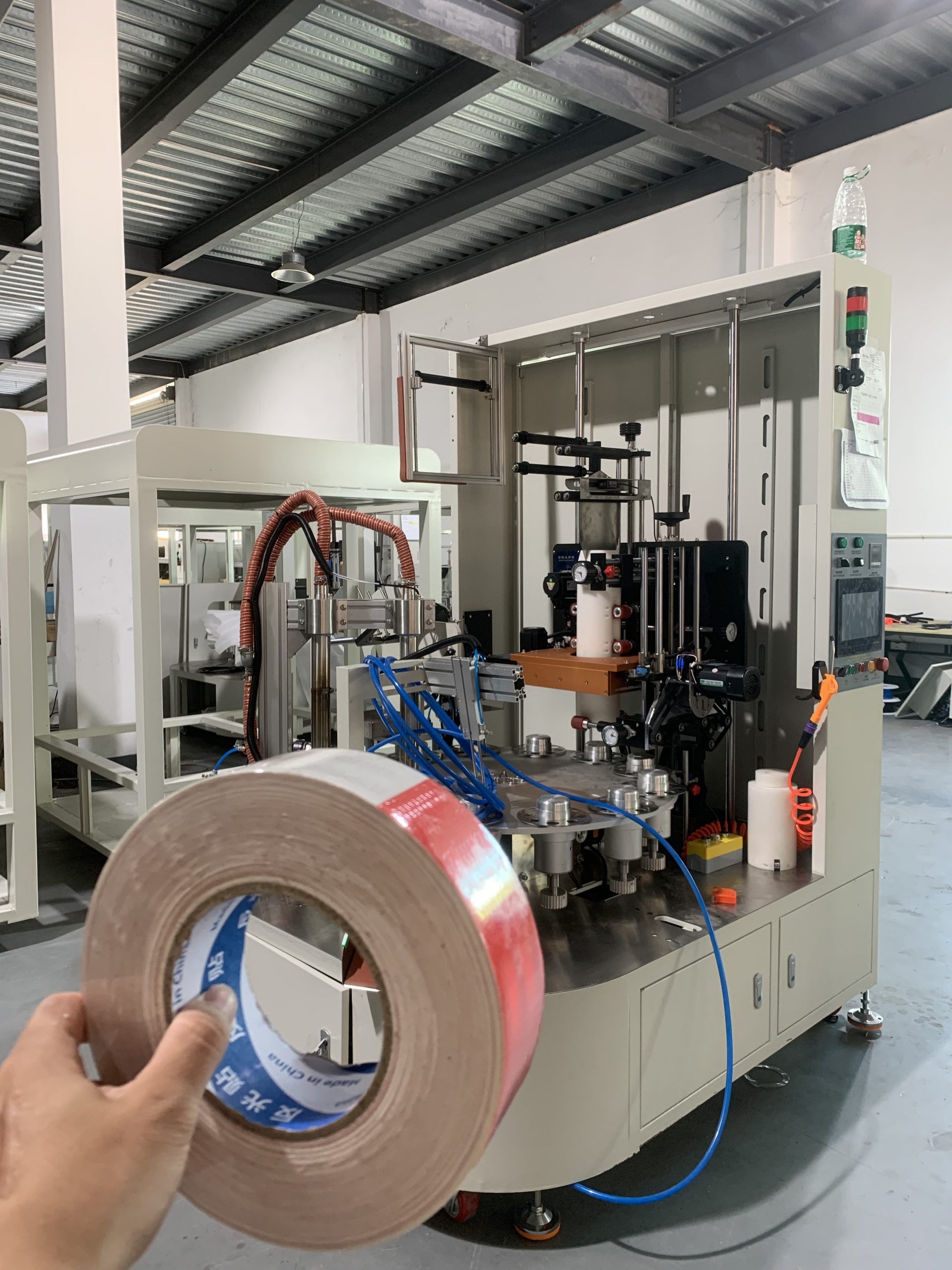

How to Choose a Tape Roll Shrink Wrapping Machine
A finished tape roll that reaches the distributor scuffed, dusty, or unlabeled is a return waiting to happen. Shrink film does three jobs at once: it protects the roll face, it carries your branding and barcode to the shelf, and it keeps the roll tight through customs and long shipping. Pick the wrong wrapper and you get wrinkled film, weak seals, or a machine that cannot keep up with the rest of the line. This guide walks the decision in the order that matters: core ID, roll format, daily output, film type, footprint, then compliance.
What Is a Tape Roll Shrink Wrapping Machine?
A tape roll shrink wrapping machine feeds a roll, or a group of rolls, into shrink film, seals it, and passes it through a heat tunnel so the film tightens around the roll. The result is a tight pack, clear or printed, that stays put from your plant to the customer. It replaces hand-wrapping with stretch film or dropping rolls loose into cartons, both of which cost labor and leave rolls moving in transit.
On a tape line the wrapper sits after the rolls are cut and wound and before case packing, which is why it decides whether every roll reaches the buyer looking like a product or like a loose coil.
The machine also handles the paper card behind the roll. That card carries your branding, and picking and placing it automatically is what separates an automatic wrapper from a hand operation.
Types of Tape Roll Shrink Wrapping Machines
The family splits by how many rolls it packs at once and how fast it runs.
SD-60SS single electrical tape automatic packaging machine
- Best for: PVC electrical tape and other rolls on 38–42 mm cores — the core range electrical tape normally runs on — at up to 65 rolls per minute, the highest rated cycle rate of the three.
- Core difference: single-roll format built around the small core, on a compact turntable frame, so it fits where floor space is tight.
- What supports it: programmable micro-computer control with one-key operation and automatic fault alarm, high-precision mechanical hand for paper-card suction, constant-temperature adjustable control, servo drive, low energy consumption.
- Choose this when your daily volume fits a single-roll pack and you cannot spare the floor space.
SD-77HM high-speed automatic sleeve label shrink packaging machine
- Best for: the single-roll pack on 76 mm ID tape rolls, at up to 55 rolls per minute.
- Core difference: same control, paper-card handling, and constant-temperature system as the SD-60SS, but built for the large core. 76 mm ID only — it will not run 38 mm or 56 mm cores. If your tape runs on small cores, this is not your machine.
- Choose this when your rolls are 76 mm ID and you want the heavier frame rather than the compact turntable.
SD-920HM semi-auto multifunction sleeve film heat shrink packaging machine
- Best for: mixed single-roll and multi-roll orders on one machine, built around 76 mm ID tape rolls. It also runs 56 mm and 38 mm cores.
- Rated speed: 0–50 packs per minute. One pack can hold several rolls, so size on rolls per shift, not packs per minute.
- Core difference: semi-automatic. The operator loads the roll; the machine places the paper card, wraps, shrinks, and discharges the pack on its own. The mold changes with roll diameter.
- What supports it: modular frame with height customized to your order; color film and transparent film opened independently; automatic paper-card suction and release; manipulator discharge; automatic stop on fault alarm; wireless remote APP monitoring and system upgrade; small footprint and low power consumption.
- Choose this when your SKU list changes often, one machine has to cover several pack formats, and you would rather spend one operator’s labor than buy two dedicated machines.
Where the Wrapper Fits on the Tape Line
Before you compare models, it helps to see where the wrapper sits in the line.
A realistic tape packaging line runs in this order: paper core preparation, then slitting and cut-to-length, then single-roll or multi-roll packaging and heat shrink with the SD-60SS, SD-77HM, or SD-920HM. Downstream, you can choose column sleeve shrink, folding pack, pillow bag, or L-bar seal and shrink, depending on your carton format. Case packing and palletizing close the line.
This guide focuses on the three shrink wrappers. If your volume justifies one integrated cell instead of separate stations, the wrapper can be quoted as part of a complete line, and the full configuration is covered in our tape packaging line guide.
Shrink Wrapping vs Manual and Carton Packing
The first question is not which machine, but whether to automate at all.
- Manual stretch-wrap or hand-film. Cheapest to start, but slow, inconsistent, and tied to one person per station. Film tension varies roll to roll, so packs loosen in transit and returns climb.
- Carton boxing. Protects well but adds cardboard cost, warehouse space, and a box that hides the roll until someone opens it.
- Automatic shrink wrapping. Higher upfront, but one operator supervises several machines, packs stay tight and labeled, and the film doubles as the billboard on the shelf.
Run the numbers before you decide. Manual packing ties up one operator per station, and at two shifts that labor cost typically overtakes the machine price within the first year once you pass roughly 500 to 800 rolls per day. Below that, manual packing is still the cheaper route. Above it, automation stops being a capital expense and starts being a cost reduction.
One converter in Malaysia running an SD-920HM measured the switch against their own hand-packing baseline: about 20 percent more output, 30 percent less labor cost per pack, and 19 percent fewer rejected packs. Their starting point was a slow, inconsistent hand line — the same comparison you should run on your own floor.
How to Choose the Right Tape Roll Shrink Wrapping Machine
1. Match the core ID first — it rules out machines before anything else.
38–42 mm cores, the range PVC electrical tape normally runs on → SD-60SS.
76 mm cores → SD-77HM, or the SD-920HM if you run other sizes too.
76 mm, 56 mm, and 38 mm mixed, or single-roll and multi-roll on one machine → SD-920HM.
The SD-77HM is 76 mm only and will not run the small cores, so confirm your core ID before you shortlist it. One more filter: the SD-60SS and SD-77HM feed themselves, while the SD-920HM is semi-automatic and needs one operator loading rolls by hand. Do not buy a single-roll machine and plan to batch later; that is not a retrofit.
2. Size by daily output, not peak hour.
Rated cycle rates: SD-60SS 0–65 rolls/min, SD-77HM 0–55 rolls/min, SD-920HM 0–50 packs/min. Treat those as ceilings, not shift averages — changeovers, film splices, and core changes all come off the number. On the SD-920HM one pack can hold several rolls, so 50 packs/min moves more rolls than it sounds. Size on rolls per shift. A wrapper that falls behind by mid-afternoon costs more per roll than the machine you should have bought.
3. Decide film type before you buy.
Need printed color film and clear film on the same line? The SD-920HM opens the two independently, so you switch branding without stopping the line or rethreading film. On a single-film machine, every changeover costs the time to stop, unload, rethread, and re-establish tension, and that time is where speed is quietly lost.
4. Check the floor, not the photo.
The SD-60SS turntable frame is compact and portable, and the SD-920HM is small-footprint as well. Measure the cell where the machine will sit, and on a semi-automatic machine leave working room for the person loading it. A wrapper that blocks the aisle or traps the operator costs more than it saves.
5. Plan for product changeover.
Diameters change by mold; heights are customized to your order. If you run many roll sizes, the SD-920HM modular design keeps changeover short. Long changeovers eat the cycle speed you paid for, so count them in the real throughput.
Questions to Ask Before You Sign
The five steps above settle the technical fit. These five questions settle the commercial terms, and the sticker price is the least of what you are buying.
1. How is the machine installed, and who pays for travel?
Remote video-guided installation means the machine is set up the same day it arrives, and commissioning typically runs one to three days. Ask whether the quote includes an on-site engineer visit or remote support, because that difference changes your total cost of ownership more than the sticker price does.
2. Does it ship with CE certification and light-curtain guarding?
For export orders, both are non-negotiable. Confirm they are included, not optional add-ons.
3. What is the real production life under two-shift operation?
Ask for reference plants running the same model. A machine rated for seven years under two-shift production without rebuild is a different asset from one rated for three.
4. Can the supplier see and fix faults remotely?
Wireless remote monitoring lets the supplier view the line and push a system upgrade without a site visit. Ask whether this is standard or an upgrade you pay for later.
5. What happens when your roll diameter or height changes?
Confirm mold changeover time and whether height customization is included in the base quote.
These are the same standards we build to at Shengde.
Not Sure Which Model Fits Your Line?
Send us your roll diameter, finished width, daily output, and film type (color, clear, or both). We will send back a one-page sizing recommendation with the model and mold set that matches your plant, and no quote until you ask for one.
FAQ
Q: How much does a tape roll shrink wrapping machine cost?
A: Price depends on roll format, output, film type, and whether you need single-roll or multi-roll capability. A single-roll machine like the SD-60SS sits at a different price point than the semi-automatic, multi-format SD-920HM. Send your roll diameter and daily output for a sized quote rather than a generic price range, because the mold set and height customization move the number as much as the base machine does.
Q: What film thickness is used for tape shrink wrapping?
A: Most tape lines run 15 to 25 micron film, depending on roll weight and whether the pack holds a paper card. Thicker film holds heavier multi-roll packs; thinner film runs faster and costs less per roll. Confirm what your film supplier stocks before you fix the tunnel settings.
Q: Can a shrink wrapper handle both PVC and BOPP tape rolls?
A: Yes, but the heat tunnel settings differ. PVC electrical tape and BOPP packing tape shrink at different temperatures and need different dwell times. Confirm the machine’s temperature range covers both before you buy, and ask whether the constant-temperature control holds each setting within tolerance through a full shift.
Q: What is the difference between sleeve shrink and full shrink for tape rolls?
A: Sleeve shrink wraps a band around the roll face and leaves the top and bottom edges exposed; full shrink encloses the whole roll. Sleeve uses less film and runs faster, which suits high-volume single-roll packs. Full shrink gives better dust protection and a more premium shelf look at a higher film cost per roll.
Q: What is the power consumption of a tape roll shrink wrapping machine?
A: Power draw depends on the heat tunnel size and how many shifts you run. Both the SD-60SS and the SD-920HM are built for low energy consumption, and their constant-temperature control avoids the reheating spikes that on/off tunnel control produces. Ask the supplier for the rated kW and the typical running kW, because the two numbers differ.
Q: Can the machine pack tape rolls with a paper card already inserted?
A: Yes. Automatic paper-card suction and release is standard on the SD-60SS and the SD-920HM, and the card is placed before the film wraps. If your cards vary in thickness or print, confirm the suction cup size during sizing.
Conclusion
Pick the wrapper by roll format and daily output, then confirm film type, footprint, and compliance. That sequence answers most of the decision before you ever ask for a price.
Not ready for a quote? Send your roll diameter, finished width, daily output, and film type, and we will send back a one-page sizing recommendation.
Ready to quote? Request a quote from Shantou Shengde for a tape roll shrink wrapping line sized to your tape or packaging plant.
