
If you manufacture tape, adhesives, or packaged consumer goods, product identification is not optional—it is what gets your roll onto the distributor’s shelf and through the customs line. A sleeve labeling machine wraps a printed film sleeve around your product and shrinks it tight, giving you a 360° branded surface that resists scuffing, moisture, and tampering. This guide explains the main types, where they fit on a production line, and how to choose one that will still be running reliably years from now.
What Is a Sleeve Labeling Machine?
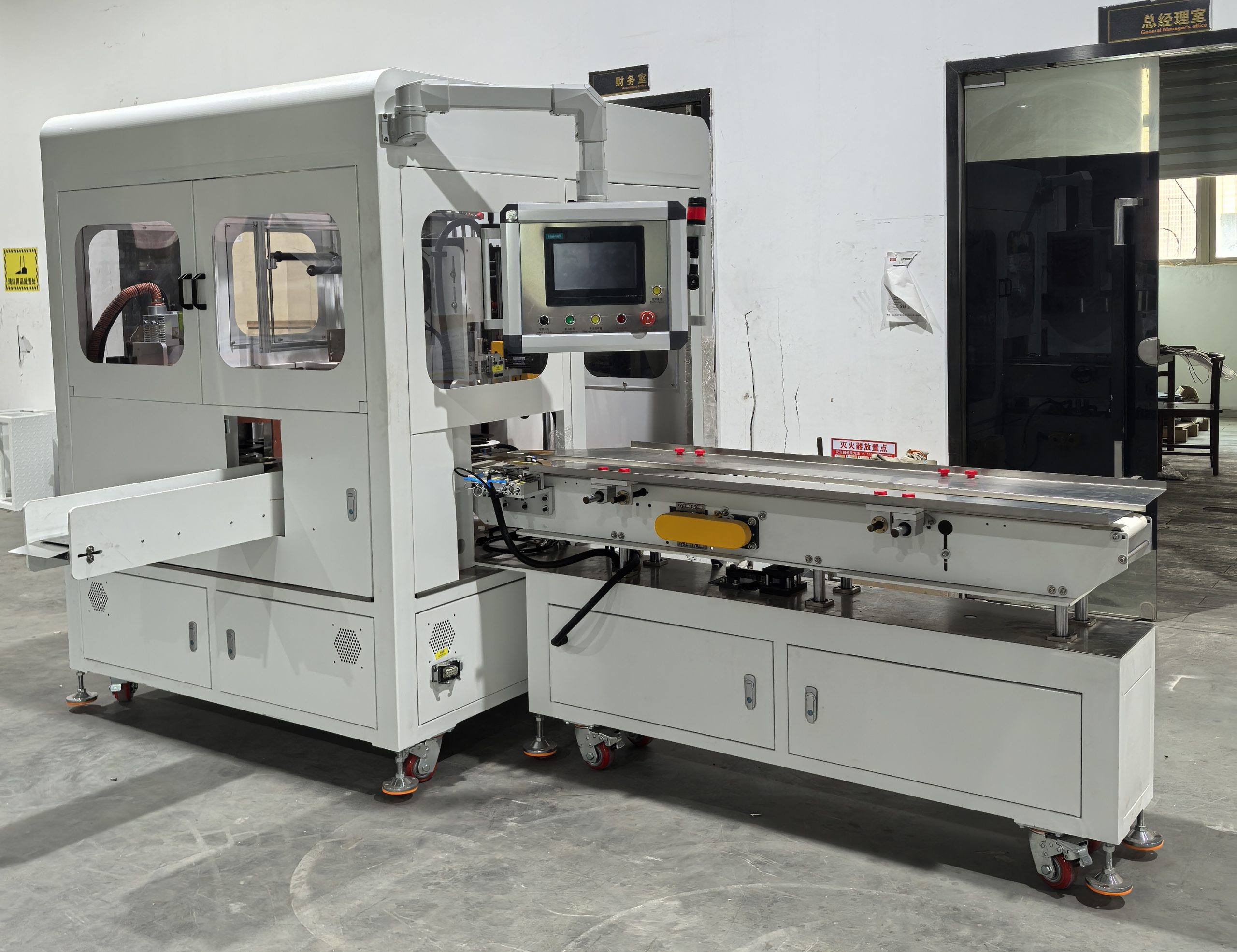
A sleeve labeler feeds a flat roll of printed PVC film, cuts it to length, and drops the loose sleeve over the product (a tape roll, a bottle, a can, or a cylindrical pack). A heat tunnel then shrinks the film so it hugs the contour. Unlike a self-adhesive label, a shrink sleeve covers the entire surface and conforms perfectly to cylindrical shapes—ideal for tape rolls, electrical tape, and round containers.
Types of Sleeve Labeling Machines
1. Manual / Semi-Automatic Sleeve Labelers — Best for low volume or sample runs. An operator loads each product; the machine cuts and applies the sleeve. Output is modest but the investment is small and the footprint fits a workshop.
2. Automatic Single-Head Sleeve Labelers — A rotating carousel or continuous belt feeds products automatically. One labeling head serves lines up to a few thousand units per hour. This is the workhorse for most tape and small-pack lines.
3. Multi-Head High-Speed Sleeve Labelers — Two or more heads run in parallel for lines above 10,000 units/hour. Common in beverage and large converter plants where downtime costs real money.
4. Combination Shrink-Sleeve + Labeling Lines — For pharmaceuticals and premium tape, a pressure-sensitive label is applied after sleeving to seal the cap area, allowing it to be completed on the same packaging line.
Where Sleeve Labeling Fits on a Tape Line
On a tape plant, sleeve labeling usually sits after packaging and before cartonning. A typical flow is: slitting/rewinding → roll packaging (shrink wrap or carton) → sleeve labeling → case packing → palletizing. Placing the labeler late in the line means the branded sleeve is the last thing applied, so it is never damaged by earlier handling.
Sleeve Labeling vs Pressure-Sensitive Labeling
A pressure-sensitive labeler applies a sticky backing label—fast and clean, but limited to flat or gently curved faces and easy to peel. A shrink sleeve covers the whole product and is far harder to remove or counterfeit. Choose sleeves when you need full-wrap branding, tamper evidence, or irregular shapes; choose pressure-sensitive when speed and low film cost matter most. A sleeve labeling machine and a pressure-sensitive labeler are different machines with different film and different change parts; do not spec one when the buyer asked for the other.
How to Choose the Right Sleeve Labeling Machine
| Factor | What to check |
|---|---|
| Output | Match rated speed to peak line demand, not ambition; a machine at 60% of peak will bottleneck you. |
| Product range | Confirm it handles your smallest and largest roll diameter without tooling changes. |
| Film compatibility | Run your PVC or PETG gauge; some heads jam on thin film. |
| Changeover | Quick-change mandrels save hours across SKUs. |
| Reliability | Ask for mean-time-between-failure data; a stopped labeler takes down the whole line behind it. |
- Output: match rated speed to your line, not your ambition. A machine rated at 60% of peak demand will bottleneck you.
- Product range: can it handle your smallest and largest roll diameter without tooling changes?
- Film compatibility: confirm it runs your PVC/PETG gauge; some heads jam on thin film.
- Changeover time: quick-change mandrels save hours across SKUs.
- Reliability: ask for mean-time-between-failure data. A labeler that stops takes down the whole line behind it.
- CE and safety: for export, CE certification and light-curtain guarding are non-negotiable.
Why Shengde
Shantou Shengde builds sleeve labeling and shrink-packaging lines for tape and converting plants worldwide. Our machines are built for 7-year reliable operation under two-shift production, and every installation includes video-guided remote installation—you get the line running with our engineers on a video call, no costly on-site trip. That combination keeps your total cost of ownership low and your line online.
FAQ
Q: Can one sleeve labeler handle tape rolls of different sizes?
A: Yes, if you specify the full product diameter range up front. We calculate matching mandrel sizes based on your product dimensions.
Q: How long does installation take?
A: With video-guided remote installation, the machine can be set up on the same day, with 1–3 days of commissioning before formal production starts—not weeks.
Q: Do you supply the printed sleeves?
A: We supply the machine and recommend film specs; you can source printed film from your local printer, or you can purchase it together with the machine from us.
Q: Is a sleeve labeler the same as a sticker labeler?
A: No. A sleeve labeling machine applies a shrink film sleeve that wraps the whole product; a pressure-sensitive labeler applies a sticky backing label to a flat face. They are different machines, different film, different change parts.
Q: Can the sleeve line run with our existing shrink tunnel?
A: Usually yes if the tunnel reaches the film shrink temperature; otherwise pair it with our SD-77HM or SD-920HM shrink packaging units.
Conclusion
A sleeve labeling machine is a small part of your line that protects your brand on every unit. Choose for output, compatibility, and reliability—and make sure your supplier stands behind the machine for the long run.
Request a quote from Shantou Shengde for a sleeve labeling line sized to your tape or packaging plant.
Related machines
Pair sleeving with our SD-77HM and SD-920HM shrink packaging units, or the SD-TB1020 cuff-pack line. For upstream slitting, read our tape slitting and rewinding guide.
