
If you run a tape plant or a converting line, the label is the last thing applied and the first thing your customer and the customs officer see. A sleeve labeler and a pressure-sensitive labeler solve the same job in two different ways. The sleeve wraps a printed film that shrinks tight over the whole product. The pressure-sensitive unit presses a self-adhesive label onto a flat or gently curved face. Pick wrong and you pay to re-tool later, or you leave tamper protection and 360° branding on the table. This advanced comparison goes past the surface. It shows where each method wins, with the numbers that actually drive a purchase order, plus the line-integration and total-cost questions buyers miss on the first pass.
What Is a Sleeve Labeler and What Is a Pressure-Sensitive Labeler?
A sleeve labeler feeds a flat roll of printed PVC or PETG film, cuts it to length, and slips the open sleeve over the product. A heat tunnel then shrinks the film so it hugs the contour. One machine covers cylinders, contoured packs, and irregular shapes with a full 360° graphic. Because the artwork is printed flat on film, you get photo-quality print across the entire body.
A pressure-sensitive labeler peels a die-cut self-adhesive label from its liner and presses it onto the surface. No heat, no film tunnel. The trade-off is coverage: it works only on flat or gently curved faces, and the label sits on top where it can be peeled or repositioned.
The real distinction is not speed or price alone. It is what the label must do on the shelf and in transit. Sleeve protects and brands the entire surface. Pressure-sensitive is faster on flat goods and cheaper per face. Everything else in this article is a consequence of that split.
Types of Each
Sleeve labeling in a Shengde line
- Sleeve applicator plus shrink tunnel: the applicator positions the printed sleeve, then an SD-77HM heat shrink packaging machine or SD-800 shrink tunnel tightens it. This is the configuration for tape rolls, electrical tape, and round containers that need sealed caps and full-body print.
- Single-head sleeve lines serve up to a few thousand units per hour. Multi-head builds run heads in parallel for lines above 10,000 units per hour, where every hour of downtime is real money.
- Film handling matters: confirm the head runs your PVC and PETG gauge cleanly. Thin film jams or wrinkles when registration is off, and a wrinkled sleeve fails the shelf test.
Pressure-sensitive labeling in the same plant
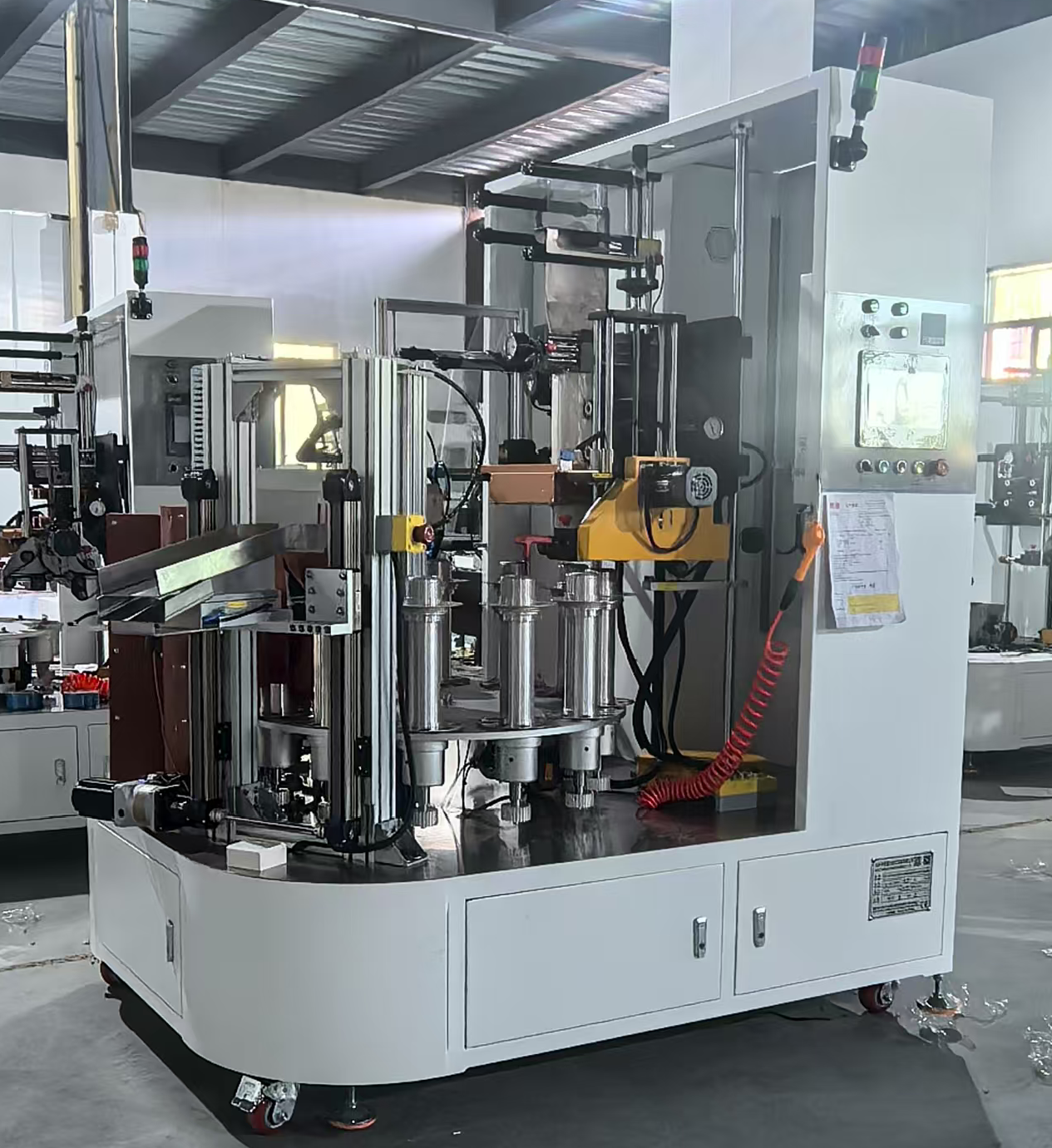
- SD-200 side-labeling machine: round rolls and bottles at 20–50 pieces per minute, about 1,200–3,000 units per hour. The workhorse for most tape and small-pack lines.
- SD-300 flat labeling machine: cartons, lids, and pouches where the face is flat.
- Changeover between label sizes is quick because there is no film registration or tunnel to tune. That is why pressure-sensitive wins on mixed-SKU runs.
For most tape converters the realistic band is a few thousand units per hour, where a single SD-200 head handles the pressure-sensitive work with no heat step. Sleeve simply adds the shrink tunnel at the end of the same line.
Where Each Fits on a Tape Line
Labeling sits late in the flow, after packaging and before case packing, so the branded surface is applied last and never scuffed by earlier handling. The real sequence:
slitting/rewinding → roll packaging / shrink (SD-77HM, SD-800, SD-60SS) → labeling (SD-200, SD-300 for pressure-sensitive; sleeve applicator plus shrink tunnel for sleeve) → case packing (SD-KFX600) → palletizing (SD-30KGA)
A pressure-sensitive line feeds straight from the labeler into the SD-KFX600 case packing machine. A sleeve line inserts the heat tunnel at the labeling stage. Both converge on the same case packer and the same SD-30KGA palletizing machine. The handoff is the part buyers underestimate: a labeler that stops takes down every station behind it, so reliability at this late stage is worth paying for.
Moving between the two methods within one family is a head swap and, for sleeve, bringing the tunnel online, normally under an hour once the line is commissioned. You are not rebuilding the line to switch methods as your SKU mix changes.
Sleeve Labeler vs Pressure-Sensitive Labeler
| Factor | Sleeve labeler | Pressure-sensitive labeler |
|—|—|—|
| Coverage | Full 360° wrap, contoured | Face or spot only |
| Tamper evidence | High, seals cap, hard to remove | Low, peels off |
| Shape handling | Cylinders, irregular, contoured | Flat or gently curved only |
| Speed ceiling | Lower, heat step added | Higher, no heat |
| Film cost per unit | Slightly higher, covers whole product | Lower per face, covers less |
| Branding | Premium full-body | Standard |
Use this rule. Round, contoured, or tamper-sealed product: sleeve wins. Flat carton or pouch at high volume: pressure-sensitive wins on speed and film cost. When both matter, run sleeve on the hero SKU and pressure-sensitive on the rest on one combined line.
How to Choose the Right Method
- Product shape first. Cylinders and contoured packs point to sleeve. Flat cartons point to pressure-sensitive. Give us your minimum and maximum diameter up front so we size the mandrel and the sleeve tunnel correctly. Guessing the range is the fastest way to a labeler that cannot run your smallest roll.
- Throughput math. The SD-200 runs 20–50 pieces per minute, about 1,200–3,000 units per hour. Pressure-sensitive scales higher because there is no heat step. Size to at least 60% of peak demand, or the line behind the labeler bottlenecks and the whole plant waits on one station.
- Tamper and counterfeit exposure. If distributors break seals or fakes circulate in your market, sleeve is the stronger barrier. The film locks the cap and shows any breach. Pressure-sensitive peels without a trace.
- Branding requirement. Full-body 360° print needs sleeve. A logo and batch code on a face is fine with pressure-sensitive. Do not buy a sleeve line for a product that only needs a face label.
- Small diameters. Below about 30 mm, a wrap-around pressure-sensitive label wastes film at the overlap and can lift at the seam. A sleeve shrinks to the contour with no overlap, so it is often the cleaner and cheaper option on narrow rolls despite the heat step.
- Consumables cost. Compare per-unit film against per-face label stock and your local sourcing. Sleeve film costs a bit more but can replace a separate carton sleeve. Pressure-sensitive stock is cheaper per face but covers less. The gap widens on small diameters where a sleeve uses less film than a wrap-around label.
- Compliance and commissioning. For export, CE certification and light-curtain guarding are non-negotiable. Plan around video-guided remote setup, not a long on-site visit, or your install date slips behind the rest of the line.
Why Shengde
Shantou Shengde builds labeling and shrink-packaging lines for tape and converting plants across Europe, the Middle East, and Asia. The machines are built for 7-year reliable operation under two-shift production. Every installation includes video-guided remote installation: the line is set up with our engineers on a video call, with no costly flight. The machine can be running the same day, then 1–3 days of commissioning before formal production. That is what keeps total cost of ownership low and your line online instead of waiting on a service visit.
FAQ
Q: Can one line do both sleeve and pressure-sensitive labeling?
A: The same labeling family supports pressure-sensitive with a head change. Sleeve needs the added shrink tunnel. We size the head to your product shape and the method you choose, so you are not locked into one approach as your SKU mix changes.
Q: What is the real install and commissioning time?
A: With video-guided remote installation the machine is set up on the same day, with 1–3 days of commissioning before formal production starts. Not weeks, and no engineer on a plane.
Q: Which method is cheaper to run at scale?
A: Pressure-sensitive label stock is cheaper per face but covers less surface. Sleeve film costs a bit more per unit yet wraps the whole product and can drop a separate carton sleeve. For your volume we size both and compare total cost of ownership, not just sticker price.
Conclusion
The sleeve labeler versus pressure-sensitive labeler decision comes down to product shape, coverage, tamper need, and line speed. Get those right and the label protects your brand on every unit without throttling the line behind it.
Request a quote from Shantou Shengde for a labeling line sized to your tape or packaging plant.
We build pressure-sensitive labeling machines for tape and converted products. The SD-200 side labeling machine applies labels to round containers, while the SD-300 top-surface labeling machine handles flat and top surfaces.
