
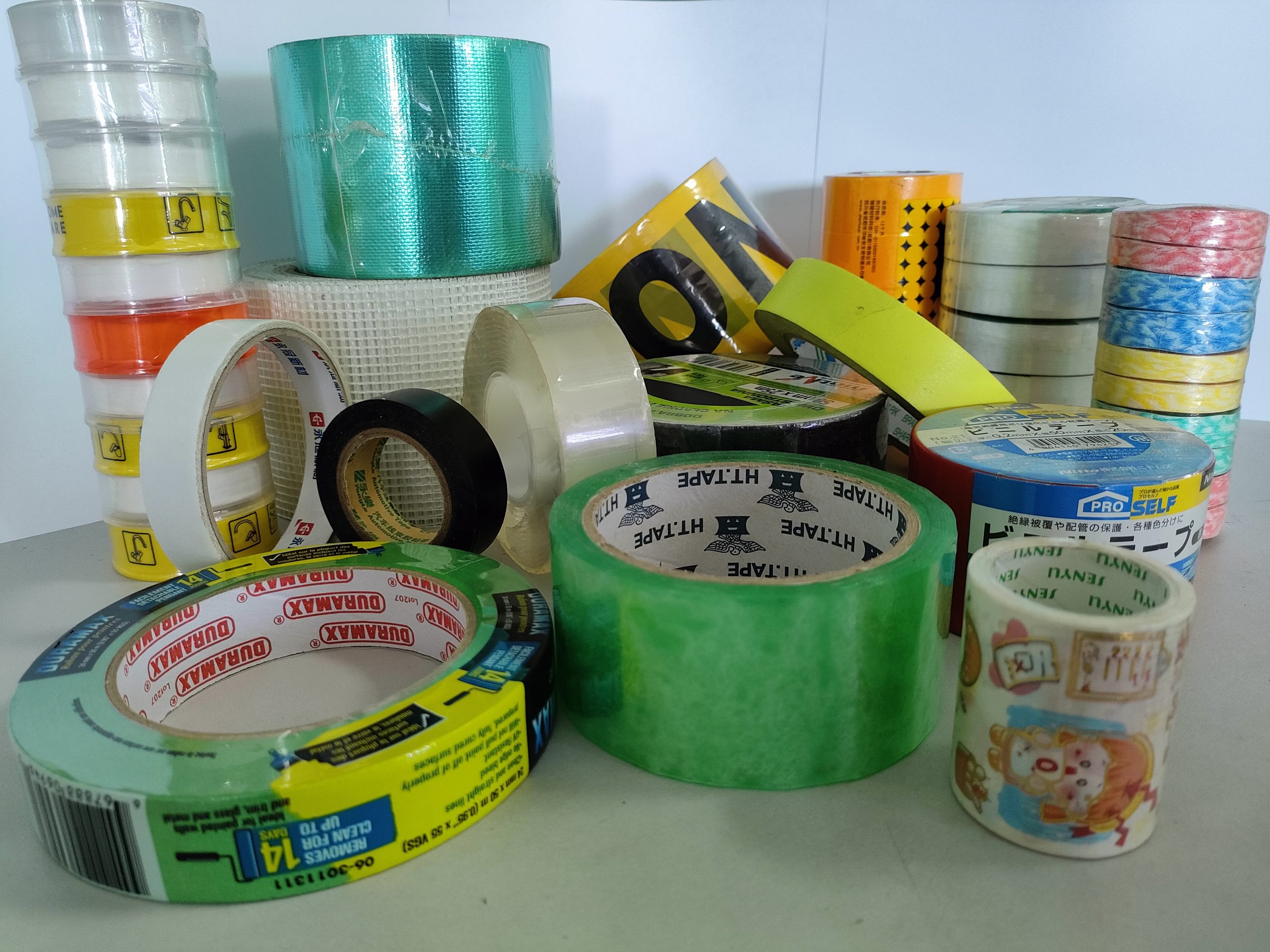

The Principle of Sleeve Labeling Machine: How It Works on Tape Rolls
A tape roll leaves the factory with two jobs for its outer film: tell the buyer who made it and protect the product on the shelf. A sleeve label does both at once. For electrical and industrial tape, the most common way to apply that label is not a stick-on patch. It is a printed film sleeve dropped over the roll and shrunk to the contour of the core. This article explains the principle of sleeve labeling machine operation on tape rolls, what actually happens inside the machine, and where it sits on a tape line. Read it before you compare models, because the mechanism decides what you can and cannot do downstream.
What Is a Sleeve Labeling Machine for Tape?
A sleeve labeling machine for tape applies a tubular or sheet film sleeve around a finished roll, then shrinks it with heat so the film hugs the roll body. On a tape line this is not a separate decoration step. The sleeve is the roll’s primary packaging: it carries the printed brand, holds a paper card, and protects the roll from dust, abrasion, and light. The machine that does this on our lines is the same machine that shrink-wraps the roll, which is why product names read “sleeve label shrink packaging machine.”
The principle is mechanical, not adhesive. There is no glue, no pressure-sensitive backing. The film is positioned, the roll is conveyed through a heat zone, and hot air causes the film to contract onto the cylindrical surface. That distinction matters when you size the line: a sleeve label survives rough handling and full 360-degree branding, while a pressure-sensitive label added later only carries a small patch of information.
Types of Sleeve Labeling on Tape Rolls
Two machine types in our range do sleeve labeling on tape. They share the same shrink principle but differ in roll handling and core fit.
SD-77HM: high-speed single-roll sleeve shrink packaging
- Best for: tape rolls on a 76 mm core that ship one at a time with a printed sleeve and paper card.
- Core difference: built around a 76 mm core only. Rolls on 38 mm or 56 mm cores do not fit this machine, by design.
- What supports it: programmable micro-computer control, automatic fault alarm, high-precision mechanical arm for paper-card suction, constant-temperature control, and servo drive. Rated at 0–55 rolls per minute.
- Choose this when: your product is a single 76 mm-core roll and you want the sleeve applied and shrunk in one pass at line speed.
SD-920HM: semi-auto sleeve film packaging, single or multi-roll
- Best for: 76 mm-core tape as the primary format, with 56 mm and 38 mm also runnable, in single-roll or multi-roll packs.
- Core difference: semi-auto with manual loading. Modular mold swap handles different diameters; height is customizable. Supports both single-roll and multi-roll sleeve packaging, and produces a neater pack than the economy cuff-type model. Rated at 0–50 packs per minute.
- What supports it: wireless remote app monitoring and system upgrade, automatic paper-card suction and release, independent color and clear film paths, fault-alarm auto stop, small footprint, low power draw.
- Choose this when: you run mixed core sizes or want the option of multi-roll sleeve packs from a semi-auto station.
A third machine, the SD-TB1020, applies sleeve film in a multi-roll towel pack (also called cuff pack) and is the economy choice for bundled output. It is covered in the line diagram below rather than as a head-to-head here.
Where Sleeve Labeling Fits on a Tape Line
Sleeve labeling is the roll-packaging step, not a post-packaging add-on. The sequence on a typical tape line runs:
Paper core preparation with the SD-F001 paper core cutter → rewinding and slitting into finished rolls → single-roll or multi-roll sleeve shrink packaging with the SD-77HM, SD-920HM, or SD-TB1020 → column or cuff shrink with the SD-1060 paired with the SD-4522 or SD-4020 tunnel → labeling (a pressure-sensitive labeler can add a batch or date code) → case erecting and sealing → palletizing.
The sleeve is applied at the packaging station, so the print and the protective film are set before the roll ever reaches a carton. That is why buyers searching for the principle of sleeve labeling machine are really asking how the roll gets its identity and its protection in one operation.
Sleeve Labeling vs Pressure-Sensitive Labeling
These are not the same step and should not be confused.
Sleeve labeling wraps the whole roll in a printed, shrunk film. It gives full-surface branding, tamper evidence, and physical protection in one action. The trade-off is that the film is the primary pack, so you size the machine to the roll, not to a label.
Pressure-sensitive labeling, done on a separate labeler, places a sticky patch, a barcode, or a compliance mark after the roll is already packed. It is faster to change for small variable data, but it adds a station and does nothing for protection or full-wrap branding.
For tape, the sleeve is the default. A labeler is the supplement, used when you need a serial or inspection mark that the printed sleeve does not carry. If a supplier offers you only a label applicator for a tape roll, they are selling you the second step and leaving the first one open.
How to Choose the Right Sleeve Labeling Setup
These six points settle the technical fit. Commercial terms come after.
1. Set the core inner diameter first. A 76 mm core points to the SD-77HM or SD-920HM. A 38–42 mm core points to a different single-roll machine in the range. This is the first filter, before speed or price.
2. Decide single or multi-roll output. Single rolls run on the SD-77HM or SD-920HM. Bundled towel packs run on the SD-TB1020. Do not size a single-roll machine for a multi-roll pack.
3. Match the film type. The shrink tunnel handles POF, PVC, and PE film. Specify your film grade and the machine is sized around it; do not assume one film fits every market.
4. Count the real output. Single-roll machines rate in rolls per minute; multi-roll machines rate in packs per minute, and a pack may hold several rolls. Compare like units or the numbers mean nothing.
5. Measure the floor space. Turntable and compact builds save line length. If the machine blocks the handoff to the next station, speed on paper does not reach the floor.
6. Plan core and height changeover. Diameter changes need a mold swap; height is customizable on some models. If you run several sizes, ask how long a changeover takes before you buy.
The six points above settle the technical fit. The five questions below settle the commercial terms.
Questions to Ask Before You Sign
- Who installs it, and does the price include travel? We use video-guided remote installation: the machine is set up the same day and runs in production after 1–3 days of commissioning, with no costly on-site trip.
- Is CE certification and light-curtain guarding included? For export it is non-negotiable, and it is built in, not an add-on.
- What is the real lifespan under two-shift production? Our machines run reliably for seven years on two shifts, which is the figure you should hold a supplier to.
- Can faults be diagnosed remotely? Wireless remote monitoring lets us support commissioning and troubleshooting without a flight.
- How are core diameter and roll height changes handled? Confirm the mold-swap and customization path before you commit to a model.
- Is the shrink method hot-air or steam? Our tunnels are hot-air internal circulation, not steam, which simplifies the utility connection in most plants.
These are the standards we build to at Shengde.
FAQ
Is sleeve labeling the same as a label applicator?
No. Sleeve labeling wraps the whole roll in a printed film that shrinks to the contour. A label applicator places a pressure-sensitive patch after packing. On a tape line the sleeve is the primary pack; the applicator is an optional later step.
What film works with a sleeve labeling machine for tape?
The shrink tunnel applies POF, PVC, and PE film. Film thickness in the 15–25 micron range is common for tape sleeves, but the exact grade depends on your roll diameter and the shelf look you want.
Do I need a separate shrink tunnel?
On the SD-77HM and SD-920HM the shrink happens in the same machine. When the sleeve roll moves to a column or cuff pack on the SD-1060, or to an L-type line, it pairs with a separate tunnel such as the SD-4522 or the economy SD-4020.
How long does installation take?
Setup is the same day with video guidance, and the line is in production after 1–3 days of commissioning. No extended on-site visit is required.
Will the sleeve protect the roll in transit?
Yes. A shrunk sleeve keeps dust and abrasion off the roll and holds the paper card in place. A Malaysian customer reported that after replacing hand-packing with automated sleeve shrink packaging, output rose 20 percent, labor cost on the packing step fell 30 percent, and defect rate dropped 19 percent, measured against their own manual baseline.
Conclusion
The principle of sleeve labeling machine operation on tape is simple to state and easy to misuse: a printed film sleeve is positioned over the roll and shrunk by hot air, giving branding and protection in one pass. The model you need follows from core size, single or multi-roll output, and film type, not from a speed number on a brochure.
Send us your roll diameter, finished width, daily output, and film type and we will return a sizing recommendation sized to your plant. When you are ready to compare the SD-77HM and SD-920HM against your line, request a quote from Shantou Shengde.
