
How to Choose a Packaging Automation Supplier in China
A packaging line is a five-year commitment you make after a one-hour video call. If the supplier goes quiet after the invoice clears, you own the downtime, the missing spares, and the customs entry nobody answers for. Buyers lose more money on the supplier than on the machine. This guide covers the three supplier types you will actually meet, how to tell a factory from a reseller in one call, and the six checks that separate a supplier who stands behind the line from one who stops replying after payment.
The Risk Is the Supplier, Not the Machine
The machine itself is rarely the problem. A heat shrink wrapper, a tape rewinder, a case packer: this is mature technology that thousands of plants run every day. What varies is everything after the crate arrives. Three things decide your total cost. Whether the supplier can commission the line remotely. Whether spares reach you in days instead of months. Whether the supplier answers in your language when the line stops at two in the morning your time.
Buy the cheapest machine from the wrong supplier and you pay for it twice, once at the port and once every time it stops. A line that sits idle for three weeks waiting on a spare part costs more than the few thousand dollars you saved on the purchase. The supplier is the warranty. Choose that first.
Three Supplier Types You Will Actually Meet
The factory. They build the machines on their own floor. You get direct access to engineering, real change requests, and parts that fit because they made them. The test is simple: ask to see the workshop on a live video call, not in a brochure. A factory can walk you across the floor and point at your machine being assembled.
The trading company. They buy from a factory, mark up, and resell. They answer fast and speak good English, but they cannot change a spec, they do not stock parts, and they often cannot tell you how the machine was built. Some are honest brokers. Many just add cost between you and the real maker, then vanish when a warranty claim lands.
The integrator. They buy machines from several factories and assemble a full line. Useful when you need a complete plant and have nobody in-house to coordinate it. You pay for that coordination, and you should confirm they have real engineers, not just a parts list and a nice proposal deck.
Where the Supplier Decision Sits in Your Purchase
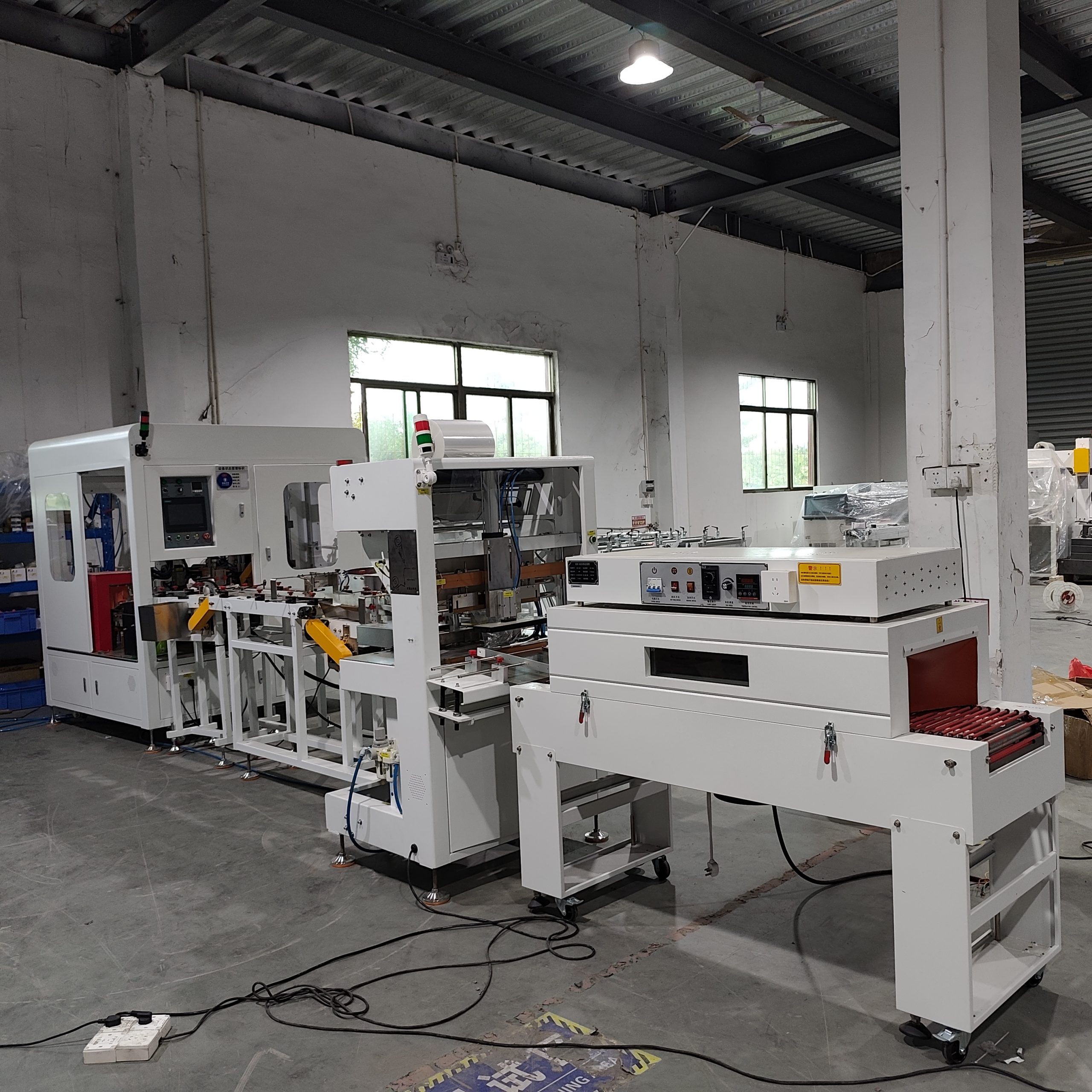
The supplier decision comes before the spec sheet, not after. You can only trust a spec if you trust the person who wrote it. On a tape packaging line the flow runs core cutting, to slitting and rewinding, to shrink packaging, to labeling, to case packing, to palletizing. One weak link in that chain stops the whole line, and every station needs a manual, a warranty, and someone accountable for the handoff between them.
Pick the supplier first, then let them size the stations to your plant. That order saves you from buying a line where each machine has a different warranty, a different manual, and nobody who owns the whole thing when it will not start. One accountable supplier beats three cheapest bids.
Factory-Direct vs Trading Company
Factory-direct costs less and responds when you need a change. The tradeoff is language and time zone; a factory without export staff can be slow to answer at first. A trading company answers fast and speaks your language, but adds margin and breaks your direct line to engineering.
The rule is blunt. If you are buying one standard machine, a good trading company is fine. If you are building a line, or you need any customization, go factory-direct. A converter asking for a custom core size or a non-standard film has no use for a middleman who has to relay every request back to a factory they may not even name. Ask the trading company who builds the machine. If they will not tell you, walk away.
How to Vet a Packaging Machine Supplier
1. Ask for running hours, not brochure years. “In business since 2010” means nothing. “Machines running two shifts for 7 years without a rebuild” means something. Demand evidence of machines still operating in the field, not a founding date on a website.
2. Ask for video of the actual machine. A live walk-around on the shop floor, not a rendered animation. If they cannot show you the machine you are buying, they may not have one. A factory shows you the metal; a reseller shows you a PDF.
3. Confirm remote installation support. Video-guided installation is now standard for good exporters. A supplier who insists on an expensive on-site visit for every install is charging you for their lack of process. The good ones stand the line up the same day and commission it in 1 to 3 days.
4. Confirm CE and guarding before you quote freight. CE certification and light-curtain guarding are non-negotiable on an export line. Get them in writing, or your operators and your customs paperwork both take the hit. Do not discover this at the port.
5. Ask about spares lead time. A motor, a blade, a heating element: something will wear out. Ask how fast a spare reaches your country and whether the supplier stocks it or orders it from someone else. Days is fine; months is not. This one answer predicts your future downtime better than any spec sheet.
6. Ask for a real reference in your region. Not a logo on a website. A phone number, or a line you can see running in your own region. A supplier who cannot name one working line near you has not proven it works there.
Why Shengde
We are the factory, not the middleman. Our packaging and converting machines have run two shifts for 7 years without a rebuild, and we can show you the lines still operating. Installation is video-guided remote, so you do not pay an overseas engineer to watch a screen; we stand the line up the same day and have you producing after 1 to 3 days of commissioning. Export builds ship with CE certification and light-curtain guarding. When you call about a spare or a change, you talk to the people who built the machine, not a reseller who has to ask someone else.
FAQ
Q: How do I know I am talking to the real factory?
A: Ask for a live video of the workshop floor with your machine on it, and ask which machines they do not build themselves. A reseller hesitates on both. We walk you across our floor and tell you plainly what we make and what we buy.
Q: Your English is a concern. How do we handle a language gap?
A: We work with overseas buyers daily and run installation over video with your operators. Drawings and documentation are in English. A language gap has never stopped a line from being commissioned.
Q: What if the machine arrives and something is wrong?
A: Video-guided remote installation means we see the line exactly as you see it. Most issues are resolved the same day; we ship spares for anything that is not. You are never left with a silent supplier.
Conclusion
The supplier is the risk, not the machine. Vet the supplier first, get your CE and guarding in writing, and demand proof of machines still running after years of two-shift work. Tell Shantou Shengde what you convert and your daily volume, and we will size the line and stand behind it.
